Community corrections leaders are under pressure to prove that electronic monitoring produces supervision value—not just equipment invoices. When offender monitoring programs pair reliable hardware with disciplined analytics, they can document compliance, reduce preventable breaches, and defend resource requests to councils and legislatures. National Institute of Justice (NIJ) guidance on offender tracking systems emphasizes dependable mapping, communications, and operational continuity; your dashboard is where that guidance becomes daily practice.
Across the United States, the same pattern repeats: agencies buy an ankle monitor fleet, stand up a vendor portal, and then discover that “dots on a map” do not equal program management. The fix is to treat GPS monitoring as a data product with defined consumers—watch officers, field officers, supervisors, courts, and auditors—and to engineer tiles, exports, and SLAs around their decisions.
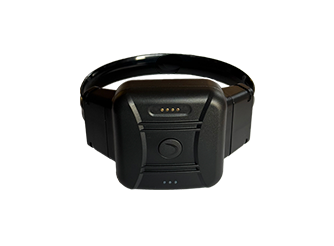
How GPS monitoring dashboards work for probation and parole
A mature GPS monitoring dashboard ingests device payloads—fixes, motion, charge state, tamper loops, cellular backhaul metadata—and normalizes them against court orders: inclusion zones, exclusion zones, curfew windows, victim proximity buffers, and reporting obligations. The UI layer should separate signal problems from behavior problems so officers do not file violations when the root cause is a dead battery or urban multipath.
Probation and parole variants share architecture but differ in cadence: parole boards may emphasize reentry employment corridors, while probation may weight treatment attendance geofences. In both cases, GPS monitoring success depends on rule libraries that version with each order amendment. If your dashboard cannot show “which rule set was active on the night in question,” you will struggle in contested hearings.
For workflow design patterns, see our probation GPS monitoring pillar and parole monitoring analytics guide. Equipment choices that change signal quality belong in equipment reviews—because the best GPS monitor analytics cannot fix chronic hardware mismatch.
Key metrics agencies should track
Compliance rates
Compliance rate in GPS monitoring programs measures time-bounded adherence to all active conditions, not merely “zero alerts.” Build denominators from ordered supervision windows and numerators from minutes where GPS-derived presence satisfies inclusion/exclusion/curfew logic, with documented exceptions for verified connectivity gaps.
Violation alerts and adjudication
Raw alert counts mislead. Track a funnel: generated → officer reviewed → confirmed violation → court action. Offender monitoring maturity shows up in falling false-positive rates while preserving fast escalation for high-severity tiers.
Zone breaches
Normalize zone breaches per hundred supervisee-days and segment by zone type (home, school, treatment, victim buffer). Electronic monitoring leaders publish dwell thresholds and map-matching rules so border jitter does not become automatic findings.
Battery status and device health
Every GPS monitor in the field should surface charge trends, expected reporting cadence vs. observed packets, and tamper-loop integrity. A sudden cohort drop in health scores often indicates carrier change or firmware—not mass noncompliance.
Real-time vs historical GPS monitoring data analysis
Real-time GPS monitoring feeds watch floors: live maps, escalating alert queues, victim-notification triggers, and officer acknowledgements. It is optimized for minutes-to-action decisions. Historical GPS monitoring analysis powers weekly supervision reviews, hearing exhibits, grant reporting, and continuous improvement. It answers “what pattern led to this breach?” rather than “where is the person now?”
High-performing agencies pair both: real-time GPS monitoring for safety, historical GPS monitoring for accountability. Export paths must reuse the same definitions your operators see live; judges notice when PDF narratives disagree with on-screen tiles. Store retention policies explicitly—some jurisdictions require years of locational history for appeals.
When procurement teams evaluate software, ask how the platform batches historical tracks for analysts without crushing browser performance. Slow historical replay trains officers to avoid the tool—then GPS monitoring reverts to anecdote.
Integration with court systems and case management
GPS monitoring does not operate in a vacuum. Case management systems (CMS) hold charges, conditions, counsel contacts, and disposition codes. Integration should map court order clauses to platform rule IDs so electronic monitoring events inherit the correct legal context.
Practical patterns include nightly secure exports of violation dispositions, webhook notifications for high-severity breaches, and read-only identifiers to prevent duplicate enrollee records. For multi-agency programs, establish a single source of truth for “active order” timestamps; overlapping probation and parole GPS monitoring assignments are a common source of contradictory geofences.
RBAC alignment matters as much as APIs—clerks, prosecutors, and treatment partners may need constrained views. Your offender monitoring architecture should prove who saw what, when, especially when victims are party to protective orders.
GPS monitoring best practices for field officers
Field officers bridge device reality and court narrative. Train them to verify GPS monitor fit, charging rhythm, and strap integrity during home contacts—not only to ask interview questions. A three-minute hardware check prevents weeks of ambiguous GPS monitoring gaps.
Document “device vs behavior” decisions in the same system that generates alerts. When officers override borderline triggers, require structured reasons so quality-assurance teams can tune geofences without blaming individuals. Pair rookies with de-identified historical shifts so they learn adjudication discipline on real electronic monitoring datasets.
Finally, align field schedules with battery physics: if your fleet averages seven-day endurance, weekly touchpoints should include proactive charging reminders before weekend coverage gaps.
Technology requirements: cellular, GPS accuracy, refresh intervals
GPS monitoring reliability depends on cellular economics. LTE-M and NB-IoT reduce power draw versus legacy wideband LTE, extending operational time for each GPS monitor while maintaining acceptable reporting latency. Agencies should certify carrier coverage maps against supervisee home and work clusters—not just downtown towers.
GPS accuracy expectations should be stated in policy: multi-constellation GNSS with Wi-Fi/LBS fallback improves urban ankle monitor tracks. NIJ-oriented programs document uncertainty at zone edges so GPS monitoring allegations rest on engineering facts, not animated maps alone.
Refresh intervals are risk-tiered: intensive GPS monitoring may demand one- to five-minute fixes; lower tiers may stretch when paired with app check-ins. Publish the expected cadence beside each enrollee so dashboards label “missing data” correctly instead of implying flight.
For procurement language on cloud vs on-prem trade-offs, read EM software: cloud vs on-premise. Security baselines belong in CJIS alignment for EM platforms.
CO-EYE Monitoring Software: thirteen functional modules
Platforms such as CO-EYE Monitoring Software illustrate how unified offender monitoring stacks cover enrollee lifecycle, telemetry, and governance in one place. The following thirteen functional modules map typical supervision workflows—use them as an RFP checklist when comparing GPS monitoring vendors:
- Enrollee Monitoring Module — caseload views tied to court orders.
- Events and Alerts Module — prioritized queues for watch floors.
- Notification Module — SMS, email, and escalation trees.
- Interactive Maps Module — live and historical tracks with layer controls.
- History Tracking Module — audit-friendly replay for hearings.
- Device Inventory Management Module — fleet state, firmware, spare pools.
- User and Permissions Management Module — RBAC for agencies and partners.
- Reporting Module — scheduled PDF/CSV packets for courts.
- System Configuration Module — zones, schedules, risk tiers.
- Mobile Applications Module — officer and enrollee mobile surfaces.
- Audit Module — immutable logs of views and exports.
- Operational KPI Module — compliance, SLA, and cohort analytics tiles.
- Data Exchange & Integration Module — CMS/court connectors and bulk export APIs.
Manufacturer documentation for the web platform lives on ankle-monitor.com/coeye-software/. Whether you standardize on CO-EYE or another stack, insist that GPS monitoring software exposes the same module boundaries—otherwise “all-in-one” contracts hide gaps until go-live weekend.
Closing the loop: from GPS monitoring metrics to public safety outcomes
Research contexts matter when you translate dashboards into policy stories. Florida electronic monitoring research has associated supervised cohorts with roughly a 31% reduction in recidivism versus matched comparison groups—use such figures carefully, as local implementation quality drives outcomes. The through-line is simple: disciplined GPS monitoring measurement turns electronic monitoring from a vendor service into a supervised public program.
If your agency is refreshing RFPs, pair this guide with probation GPS dashboard metrics and offender tracking dashboard UX. When you need vendor-neutral hardware benchmarks before you expand the fleet, start at equipment reviews.
Frequently asked questions
What is the difference between real-time and historical GPS monitoring analysis?
Real-time GPS monitoring supports immediate officer actions—maps, live alerts, victim notifications. Historical GPS monitoring analysis rebuilds timelines for hearings, audits, and trend detection. Effective programs operationalize both layers with identical definitions.
Which KPIs should probation and parole GPS monitoring programs track first?
Prioritize compliance rate, confirmed zone breaches (normalized), alert adjudication funnel quality, GPS monitor battery and connectivity health, and alert response-time SLAs by severity tier.
How often should a GPS monitor report location?
Follow court risk tiers: intensive community supervision may require frequent fixes; lower tiers may relax intervals when supplemented by check-ins. Document expected cadence beside each enrollee so your GPS monitoring dashboard interprets silence correctly.
How does GPS monitoring software integrate with court case management?
Through secure exports, APIs, or middleware that sync supervisee identifiers, order clauses, disposition codes, and zone schedules—so electronic monitoring events align with the case file narrative judges already use.